20 maggio 2019

The Shaman Within: Channeling Universal Life Force to Heal Your Body

We live in a sea of subtle energies. We can become conscious of them and learn to use them.

Ancient cultures understood that we live in a vast sea of energy. They understood that the planets and stars are conscious beings who communicate with each other. They believed that the trees serve as antennas, which allow natural subtle energies and information to flow up from the Earth to the stars and planets, and from all other celestial bodies into the Earth. They taught that everything and every being has consciousness and channels this energy according to its capabilities, to help facilitate this essential cosmic dialogue. In fact, they understood that all matter, including the physical body, is a gathering of this universal energy. They recognized that our thoughts and emotions are a form of energy, and that when these are in harmony with the living universal energy field, we become clear channels. Then, the life force of the Earth and cosmos flows through us more smoothly and abundantly, guiding our evolution as new perspectives are revealed and advanced abilities are awakened within us. These abilities include heightened creativity, extrasensory perception and the ability to bring about dramatic physical healing. Shamans learn to feel, sense and use this energy without filtering or distorting it. They often refer to this process as becoming a “hollow bone”.

We transmit and receive energy.

This universal sea of energy, called Qi in China and Prana in India, circulates through our bodies, interacts with the electromagnetic spectrum and includes other subtler energies not yet understood by western science.1 It is the foundation for the practice of acupuncture, where thin needles are used to assist the flow of vital energy through meridians in the body. It is the inner force that advanced martial artists cultivate and direct outward. The Hopis of the American Southwest use the term Kachina to describe the world of subtle energies. They perform rituals and ceremonies to interact with the Kachina in order to attract rain to grow their crops, and to receive healing and other benefits. The Dogon people of Africa call the channel through which the Earth projects energies through us, the Bayuali. They call the channel through which we receive energies from the cosmos, the Yenu. The Dogon believe that it is our responsibility as humans to become clear channels who ease the flow of cosmic energies rather than interfere with or obstruct them.
Although western medicine limits its focus to electromagnetic energies, it does acknowledge that the human body functions as a two-way antenna. Doctors use tools such as ECG’s and EEG’s to determine whether a patient is still alive by measuring the electrical energy being transmitted from within that patient’s body. They understand that our bodies receive information from electromagnetic fields in our environment to regulate circadian rhythms, such as our sleep-wake cycles. 2 Scientific studies indicate that the spinal cord (containing cerebro-spinal fluid which is conductive) acts as a natural antenna and that DNA serves as a fractal antenna, capable of operating at many different frequencies simultaneously. 3 It is also interesting to note that the U.S. army demonstrated that trees work as remarkably good antennas for wireless communication and used them for this purpose during the Vietnam War. 4

7.83 HZ: The Earth and cosmos exchange energy and information.
wadet1-2
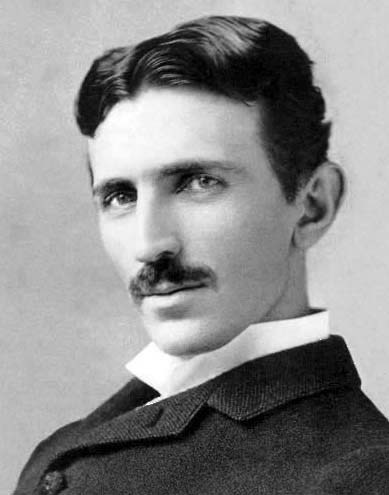
Nikola Tesla – the physicist whose inventions laid the foundation for our modern use of electricity and wireless technologies such as alternating current, radio, x-ray, radar and remote control – discovered that the Earth receives, stores and transmits energy. In 1899, he built a lab in Colorado Springs on the summit of Pikes Peak, a site considered sacred by the Hopi and Ute Indians. While running experiments there, he detected extremely low frequency (ELF) waves of electromagnetic energy being naturally transmitted within the cavity between the Earth’s surface and the ionosphere, 80 kilometers above the Earth. He discovered that within these ELF waves, those that vibrated at about 8 cycles per second (8 Hz), flowed more smoothly between the Earth and ionosphere, with less resistance and greater amplitude (force or power). 5 He believed it was possible to use this innate frequency of approximately 8 Hz as a carrier wave to transmit information and power without wires, to any part of the world. 6 Tesla was deeply interested in preserving the Earth’s natural resources for future generations. He spoke fervently about the need to discontinue the use of fuel as a power source. His goal was to harness “the very wheelwork of nature” by tapping into the natural and renewable storage battery that exists between the Earth and the ionosphere. 7 He was unable to obtain sufficient funding to complete projects involving the wireless transmission of power, however his idea of the wireless transmission of information led to the invention of both AM and FM radio. 8 Tesla also stated that during his time at Pikes Peak, he recorded radio waves being emitted from the cosmos to the Earth. Countries around the world now use radio waves to analyze the composition of stars and planets. 9 In 1952, a physicist named Schumann measured the resonant frequency of the Earth-ionosphere cavity more specifically to be 7.83 Hz (confirming Tesla’s calculations of approximately 8 Hz). The Earth transmits and receives a measurable energetic frequency that surrounds all life on this planet. It has been discovered that the human brain, while in a deep state of meditation, lowers its brainwave oscillations to harmonize with the Earth’s resonant frequency.

We tune into this cosmic dialogue of energies by adjusting the frequency of our brainwaves.
wadet1-3
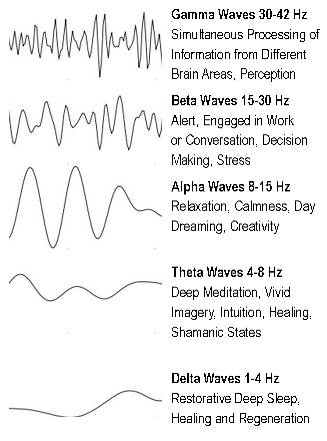
In Shamanic traditions, drums have long been used to produce rhythmic vibrations that assist the Shaman in attuning his/her mind with the living universal energy field. In this state of altered consciousness, the Shamanic practitioner is able to interact with the non-physical world. They channel and transmit subtle universal energies to help heal themselves and others. They also receive information in the form of vivid imagery, thoughts, words and ideas communicated to them by guides and ancestors from the spirit world. This shamanic tradition has been studied using EEG tests. Results showed that the brainwave pattern of the subjects slowed down into a theta state. 10 This state is entered when the majority of brainwaves transmitted by the subject, begin oscillating at a frequency of 4-8 cycles per second (4-8 Hz). EEG studies performed on regular meditators revealed that they also enter this theta state during periods of deep meditation. 11 Those who practice a consistent meditation routine often report experiencing a shift in their awareness of surrounding energies, sudden realizations, colorful visions, new abilities and emotional and physical healing. They also report that the more often they meditate, the easier it becomes to access this altered state.
Tesla was aware of this living universal energy field. In his article, Man’s Greatest Achievement, he used Vedic terms such as Prana and Akasha to describe this field, from which all perceptible matter is generated. He said that he accumulated many of his ideas while alone in deep meditation. 12 He called himself “a sensitive receiver” and reported seeing visions and receiving premonitions, including one that helped him to prevent his friends from boarding a train that later crashed. 13 He disclosed that he had a photographic memory and described visualizing his inventions in such detail that he could operate the device in his mind, then make improvements to it and provide precise and correct measurements without ever even drawing a sketch. 14
A shamanic practitioner explained to me that we all continuously receive and transmit energy and information through this subtle universal field. However we spend much of our time in the higher frequency beta brainwave state (15-30 Hz) associated with alertness, logic, critical reasoning and stress. This distracts us from the subtler energies and inhibits their flow through our bodies. We could compare this to having our car radio tuned into the same station all the time, not knowing that we can adjust the dial. Adjusting our brainwaves to the Earth’s natural frequency of approximately 8 Hz through regular meditation, is like turning the dial on your radio to a new station. While tuned in we receive more life force and information from the universe. At this frequency, we also transmit energy with the benefit of constructive interference. This term, used in physics, describes the increased amplitude (force or power) that occurs when two waves of the same frequency come together. When we harmonize our brainwaves with the natural frequency of the planet, our intentions are transmitted with the force of the Earth behind them, giving them much more power and direction.

New abilities are awakened within us.

In a previous article, Your Cells Are Listening, How Talking to Your Body Helps You Heal, I wrote about a surprising ability that was awakened within me after several months of dedicated meditation. This is the ability to converse with my body through words, and receive dramatic physical responses. As I talked with my leg – where I was experiencing severe pain and partial paralysis caused by a condition called reflex sympathetic dystrophy – I suddenly felt scar tissue unwinding under my skin, nerves firing and energy moving along defined pathways through my calf. My calf muscles began to perform flexion and extension exercises independently of my conscious control, as electric-like jolts continued to shoot through the area. Through a series of conversations with my leg, I was able to completely restore function to the muscles. Realizing the broad potential of this mind-body technique, I organized my approach into a system that I could teach to clients, called Antara (Sanskrit for within).

Experiences we have encountered in our lifetime and how we have processed them determines the way our body funnels universal energies.
 

© Cedron Mark Sterling LMP.

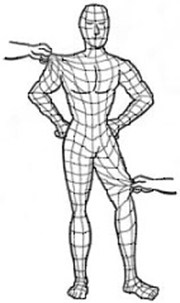
By communicating with different tissues in my body, it became clear that changes in the connective tissue called fascia were responsible for unwinding the tension and scar tissue, freeing the impinged nerves, unblocking the acupuncture channels and allowing communication to be restored between my nerves and my muscles. The fascial network is a thin, very strong, three-dimensional net of biological fabric, containing many layers which envelope and infuse every other tissue in your body. Providing both integrity and elasticity, the fascia holds your organs in place and aligns your spine and joints while allowing mobility. It also provides pathways for blood vessels, nerves and lymphatic vessels to travel through, so that nutrients and hormones can be delivered to every cell and toxins can be carried away to be eliminated. The fascia also serves as the supporting physical material for the acupuncture meridian system. Physical trauma can lead to increased tension and the formation of scar tissue within the fascial network. This causes the fascia to shorten and tighten, which can impinge nerves, disrupt the flow of blood, lymph and energy and pull the spine and joints out of alignment.
While applying and teaching this technique, I have observed that emotional trauma also plays a role in fascial tension and scar tissue. According to shamanic belief, physical tissues at the deepest level, are a gathering or concentration of emotional energy. All physical life forms begin with a single emotional impulse. Emotional energy is the trellis that physical bodies grow on. My experience with the Antara method suggests that the fascial network in the body is a physical representation of what I call emotional latticework. Each of us builds our own unique emotional latticework within our body that is formed from the energy of both positive and negative emotions. Stress, unresolved traumas, and suppressed emotions can build a complicated energetic latticework containing disharmonious frequencies that seem to change the tonicity of the fascia and interfere with energy flow. Imagine the fascia as a biological fabric made up of many long threads. Each thread vibrates with life force similarly to how a string on a guitar vibrates when waves of energy travel through it. When you tighten a guitar string by twisting the tuning key, this raises the pitch (the frequency of vibration of the string). When the tonicity or tension of the fascial threads change, their frequency of vibration also changes, and the body becomes an out of tune instrument. This alters the resonance allowance of the body or the range of frequencies that the body naturally channels.
Often while communicating with my own body, I would feel very obvious unwinding sensations in my fascia, and each time that I was able to release a new line of tension or layer of scar tissue, I would experience an intense dream that very same evening. The dreams would usually involve people, relationships or events from my past – usually those that I haven’t thought about in a very long time. Occasionally the dreams would be based on primal fears (or possibly past life experiences) rather than anything I have experienced in this lifetime.
Clients also report being surprised by the unexpected emotions or dreams that surface while they are practicing Antara. This is true in both gradual and sudden onset cases of chronic pain. It seems that the energy of unexpressed emotions can compromise the tonicity of the fascia, and interfere with the normal healing process after injury. At some point the emotion becomes trapped within the tissue. The Antara process unwinds the fascia and releases the trapped energy, then the emotion is experienced as it either easily flows out of the body or is brought to the surface where it can be acknowledged, processed and then released. The newly liberated fascial threads re-integrate with the whole, as the fascial network begins to function like an orchestra playing in harmony again. The life force from the Earth and stars flows more smoothly through the body and the regenerative processes return.


Illness and injury are an opportunity to evolve.

In Shamanic teaching, illness that does not respond to conventional treatment often indicates a spiritual initiation process that leads to the disruption of normal life and withdrawal from the mundane world. The individual undergoes a period of physical, psychological and spiritual trial, where they must feel, understand and integrate the most difficult experiences of their life. By seeking answers to the mysteries of life and by turning inward through meditation, new levels of awareness are reached. The individual gains freedom from self-imposed restrictions and oppressive environments (both of which can manifest as tension in the fascial network that resists energy flow). They realize that every physical challenge, every emotion, and every person that crosses their path has been a stimulant for their own evolution and are able to navigate life with more inner peace and trust in the process. With less interference, they begin to channel universal life force more freely and discover surprising abilities within. This transformation can lead them to a higher purpose or destiny than previously imagined. They are given the opportunity to heal themselves and then share what they have learned while making a lasting contribution to the world. The Antara method is the result of my own experiments with focused intention during deep meditation. While in a brainwave state attuned with the Earth’s natural resonance, my intentions to communicate with my body are transmitted with greater power and direction. With the support of the Earth and Cosmos and the cooperation of my physical body, I was able to manifest dramatic and profound physical healing. We exist in a living universal energy field. Each one of us can become conscious of this field and learn to better cooperate with it in order to overcome challenges, and to fulfill our higher destinies in this life.


References

  1. C. Hiltner, “Interview with Alexander V. Trofimov, MD.” Quantumpranx.wordpress.com, March 3 2009, Retrieved Feb. 24, 2016;
    L. McTaggart, The Field: The Quest for the Secret Force of the Universe. HarperCollins Publishers, 2008, ISBN 978-0-06-143518-8;
    D. Wilcock, The Source Field Investigations: The Hidden Science and Lost Civilizations Behind the 2012 Prophecies. Penguin Group, 2011, ISBN 978-0-525-95204-6.
  2. D. Holzman, What’s in a Color? The Unique Human Health Effects of Blue Light. Environ Health Perspect, Jan. 2010; 118(1): A22–A27. PubMed PMCID: PMC2831986.
  3. S. Balaguru, R. Uppal, R. Pal Vaid and B.P. Kumar, Investigation of the spinal cord as a natural receptor antenna for incident electromagnetic waves and possible impact on the central nervous system. Electromagnetic Biology and Medicine, Volume 31, Issue Feb. 2012, pp. 101-111. doi: 10.3109/15368378.2011.624653 . Full Text.
    M. Blank and R. Goodman, Dna is a fractal antenna in electromagnetic fields. Int J Radiat Biol, April 2011; 87(4):409-15. doi: 10.3109/09553002.2011.538130. Epub Feb. 28 2011. PubMed PMID: 21457072.
  4. G. Squier, Talking Through The Trees. Electrical Experimenter, July 1919, p. 204.
    K. Ikrath, W. Kennebeck, and R. Hoverter, Performance of Trees as Radio Antennas in Tropical Jungle Forests, (Panama Canal Zone Experiments), United States Army Electronics Command, Fort Monmouth, N.J., Research and Development Technical Report, Feb. 1972.
  5. Tesla: Life and Legacy – Colorado Springs. PBS. Retrieved February 29, 2016.
  6. N. Tesla, “The Transmission of Electric Energy Without Wires”. Electrical World and Engineer March 5, 1904, 43: 23760–23761.
  7. T. Valone, Harnessing the Wheelwork of Nature. Adventures Unlimited Press, 2002, pp. 9-11. ISBN 1-931882-04-5.
  8. K. Orrman-Rossiter, Ahead of his time: the genius of Nikola Tesla. Australian Science, Jan. 30, 2013. Retrieved Feb. 24, 2016.
    Tesla: Life and Legacy – Who Invented Radio? PBS.org. Retrieved Feb. 29, 2016.
  9. To Mars with Tesla. Teslasociety.com. Retrieved Feb. 25, 2016.
    Tesla: Life and Legacy – Colorado Springs. PBS. Retrieved February 29, 2016.
  10. B. Gingras, G. Pohler, and W. Tecumseh Fitch, Exploring shamanic journeying: repetitive drumming with shamanic instructions induces specific subjective experiences but no larger cortisol decrease than instrumental meditation music. PloS One, 2014; 9(7): e102103. Published online Jul. 7, 2014. doi: 10.1371/journal.pone.0102103. PMCID: PMC4085008.
  11. J. Lagopoulos, X. Rasmussen, A. Vik, G. Malhi, C. Eliassen, I. Arntsen, J. Saether, S. Hollup, A. Holen, S. Davanger, O. Ellingsen. Increased theta and alpha EEG activity during nondirective meditation. J Altern Complement Med. Nov. 2009;15(11):1187-92. doi: 10.1089/acm.2009.0113.
  12. Nikola Tesla at 75, Time Magazine, July 20, 1931, Vol. XVIII, No. 3.
  13. J. O’Neill, Prodigal Genius: The Life of Nikola Tesla. Cosimo, Inc. 1944, p. 264, ISBN: 1-59605-713-0.
  14. Ibid., p. 257.

16 maggio 2019

Robbie Williams rivela il significato di "Angels"


 "Angels" è una delle canzoni di Robbie Williams più famose e apprezzate e forse la più iconica della sua carriera.

Pubblicata nel 1997, il significato celato dietro la sua melodia è rimasto ignoto fino ad oggi.


Risultati immagini per robbie williams
Robbie Williams


E' noto che Robbie Williams creda nelle forme di vita extraterrestri e lui stesso, parlando della hit Angels, ha affermato che tratta delle sue prime esperienze con il paranormale. Aveva tre anni quando ha iniziato ad avvertire e parlare con i morti e "Angels" parla proprio di questo.

In un'intervista rilasciata al The Sun Online, il cantante inglese ha affermato: "La prima vera canzone che ho scritto è Angels che parla di veri angeli. Le persone credono che sia dedicata a mia madre o a qualcuno che ho amato, ma in realtà parla di angeli".
Ha poi continuato dicendo: "Questi fenomeni sono sempre stati una costante nella mia vita quindi non c'è stato un solo istante in cui io non sia stato cosciente del fatto che ci fossero delle presenze invisibili".

Giulia Marrix


Fonte 


BUGGIN' ANGELS INSTEAD

Robbie Williams reveals mega-hit Angels is about hanging out with ghosts as a child


The singer, 45, admitted that as a kid he used to 'talk to dead people'


Clikka questo


ROBBIE Williams used to spook his dad out by speaking to dead people - inspiring the hit song “I’m loving angels instead”.
The singer, who has quit the next series of The X Factor, said he had been attracted to "unusual phenomena" all his life.
Robbie, 45, said: "When I was a kid I used to talk to dead people.
“I freaked my father out when I was three, four and five and they were people that had passed on.
"I had lucid dreams. There's been UFOs, one close enough I could throw a tennis ball.
“I used to call them ghosts but I don't anymore as I don't know what they are.
"I've seen things that I can't explain that have influenced my life and the path that I'm constantly on.
“The phenomena has been constant so there hasn't been a moment of my life when I haven't been aware of the presence of something unseen.
"The very first song I wrote was Angels and it's about actual Angels.
“People think it's about my mum or think it's about somebody I loved but it's actually about angels. That's been my biggest hit by far.
“If it wasn't for my belief or semi belief or trying to understand what it is I see and feel every now and again I wouldn't be where I am."
He claims he saw a UFO as he wrote his 2009 hit Arizona while living in the San Fernando Valley in LA.
He said: "I'm in my old house and we started to write this song called Arizona which is about alien abduction and while we were in the process of producing I look up and there was a golden globe in the sky.

Source


13 maggio 2019

Come riconoscere l'apertura dell'occhio interiore

L’apertura del terzo occhio è un processo lento e graduale, che è possibile riconoscere grazie ad alcuni segni o “sintomi”.

Risultati immagini per terzo occhio matrix


“L’uomo, sapete, ha soltanto due occhi che vedono e registrano tutto, una vista che è come una straordinaria macchina fotografica che riprende immagini minute, molto nitide, minuscole; e con quell’immagine l’uomo dice a se stesso: Questa volta conosco la realtà delle cose, e per un momento è tranquillo.


Poi, sovrapponendosi gradualmente all’immagine, compare un altro occhio, che riprende un’immagine del tutto diversa. A questo punto il nostro uomo non vede più chiaramente; ha inizio una lotta tra i primi due occhi occhio e il terzo, una lotta feroce, e alla fine il terzo occhio ha la meglio, assume il controllo e così la lotta finisce. Ora che ha in mano la situazione, il terzo occhio può continuare il suo lavoro da solo ed elaborare la propria immagine, secondo le leggi della visione interiore. Questo occhio speciale si trova qui – disse Matisse – indicando il cervello”.

Per prima cosa, per riconoscere un’eventuale apertura dell’occhio interiore, puoi notare se ti riconosci in qualcuno di questi sintomi:
– Stai trascorrendo un periodo in cui le cose che vedi non sono più come prima, non hanno più quelle sembianze, quel senso, quel significato/interpretazione, quel valore che gli attribuivi in precedenza;

Risultati immagini per matrix

– Il mondo ti si rivela, ora, con particolari tratti che prima non riuscivi a cogliere;
– Inizi a vedere e a volerti liberare da certe catene e continui a chiederti come mai gli altri non intravedano i lacci che li tengono legati e li costringono a sottomettersi a certi carcerieri;
– La nuova visione è così sbalorditiva da gettarti quotidianamente nello stupore;
– Ogni giorno, in misura progressiva, percepisci un non so ché di incorporeo che sollecita i tuoi sensi e, per quanto banale o insensato, stimola la tua meraviglia;
– Hai il presentimento di possedere una vista che non sia solamente legata all’organo fisico, agli occhi, ma a un’area più sottile ed estesa del tuo Essere (in relazione col mondo e con l’universo);
– Stai sperimentando dei bagliori intuitivi che ti mostrano tutte le cose da altre angolazioni o che illuminano come una torcia alcune zone buie ed incomprensibili.
– Interagisci con agenti istruttori particolarmente evoluti di questo o altri piani (dimensioni), o sai che, in qualche modo, qualcuno o qualche forza primordiale, avvolge la tua vita e ti lascia ogni tanto degli indizi.
Se avverti uno o più di questi sintomi, significa che sei sulla buona strada e che probabilmente i tuoi occhi (interiori), che prima erano sigillati, coperti, ora si stanno parzialmente aprendo, stanno lasciando passare gradatamente piccoli raggi di luce,per consentirti di mettere a fuoco ed evitare di abbagliarti bruscamente.
Come qualunque altra cosa, è necessario che la pupilla (interiore-esteriore) non venga attraversata da una quantità eccessiva di luce. Siate parsimoniosi nel dosaggio. La cupidigia potrebbe portarvi a voler accumulare più di quanto vi serva o vi meritate, causandovi, con tale brama, più svantaggi che vantaggi, e un ritorno della cecità al posto della vostra luminosa facoltà. Sarebbe come fissare il Sole ed esporsi eccessivamente ai suoi raggi: l’abbaglio è inevitabile.
E’ un processo molto lungo ma gratificante per chi sa pazientare… e quando alla fine giungerà il momento e tutto l’alone svanirà, allora tu, con i tuoi nuovi occhi, abbraccerai con un sol sguardo il Cosmo in tutto il suo splendore, ed esso a sua volta ti avvolgerà in un senso di pace e serenità maestosa.

18 ottobre 2018

Near Death Experience: “Uomo descrive un tunnel di luce e un viaggio tra le stelle e pianeti”

Un uomo morto temporaneamente, afferma di aver viaggiato attraverso un tunnel di luce. Poi racconta la storia dell’universo e del tempo che gli viene  insegnata da un misterioso essere superiore.

Fornendo il suo nome solo come Fred, descrive la sofferenza di una malattia grave e sconosciuta quando morì clinicamente per diversi minuti. Nonostante sia stato riportato in vita dai paramedici dopo poco tempo, Fred ha detto che l’esperienza è sembrata un’eternità.

 
Il testimone ha detto che stava morendo, poi ha cominciato a vedere le pareti tutte intorno alla sua stanza che cadevano e lui ha cominciato a vedere una luce intensa attraverso un tunnel. “Da questa luce venne una scala con un uomo che veniva verso di me”, dichiara Fred al tabloid britannico Daily Express.
Il misterioso uomo si presentò come “HeaTayaham” e guidò Fred su per le scale e attraverso un tunnel luminoso. Fred ha scritto questa storia alla Near Death Experience Research Foundation :
“Mi prese per mano a un ritmo straordinario attraverso un tunnel e poi attraverso tutto lo spazio e tutti gli altri pianeti che esistevano. Spostandomi nello spazio, mi ha spiegato tutto e voleva mostrarmi tutto ciò che aveva già creato. Stava ‘scaricandomi’ informazioni su come è stato fatto tutto, quanto tempo ci è voluto.”

 
Fred ha poi detto che l’uomo gli ha “trasmesso” una nuova lingua nel suo vocabolario, che gli permetterà di comunicare in qualsiasi momento, prima di restituirlo al suo letto d’ospedale.
Molte persone descrivono la sensazione di separarsi da se stesse e osservare medici e infermieri che lavorano su di loro.
Il dott. Parnia dice che ci sono spiegazioni scientifiche per la reazione e dice che vedere le persone non è una prova dell’aldilà, ma è più probabile che il cervello si stia analizzando come una tecnica di sopravvivenza.
Ha detto:  La morte attraverso la tecnologia e la scienza moderne non deve essere limitata alla filosofia e alla religione, ma può essere sfruttata attraverso la scienza.  Possono ascoltare le cose e registrare tutte le conversazioni che stanno accadendo intorno a loro. Ovviamente molti ricercatori e scienziati la pensano in modo diverso rispetto a ciò che dice il Dott. Parnia. Esistono moltissime prove convincenti in cui moltissime persone descrivono le loro esperienze di NDE – Near Death Experience, separazione dal corpo e viaggi nell’aldilà con ECG piatto, poi il ritorno nel corpo e alla vita quotidiana. Guardate il video dedicato!


22 settembre 2018

La piramide di Cheope e la concentrazione di energia magnetica: forse a Giza non abbiamo scoperto ancora tutto

Avevo promesso un post su questo argomento, ma contavo di ritrovare l’articolo dell’Ansa d’inizio agosto che l’aveva presentato. L’ho finalmente recuperato ed è così che vado a proporvi una discussione su una recente scoperta relativa alle piramidi egizie e in particolare a quella di Cheope: sembrano in grado di concentrare energia elettromagnetica. Questo a mio avviso apre a nuovi scenari e la mia idea ve la dico alla fine. Ora vi lascio al testo della nostra agenzia ufficiale di stampa. 

 Risultati immagini per piramide di cheope energia


28 giugno 2018

7 SEGNI che ti dimostreranno di AVER VISSUTO molte VITE PASSATE

La convinzione è che ogni essere umano abbia un’anima che continua a rivivere in nuove forme di vita, mentre si muove sul suo cammino karmico, per raggiungere uno stato di “perfetta illuminazione”. Sempre se ci si riesce!

Se si raggiunge questo obiettivo, l’anima cessa di rinascere perché ha compiuto il suo cammino evolutivo, e non ha più bisogno di accumulare esperienze nel gioco di questa dimensione-sogno.
Hai mai sentito che esistono anime antiche, cioè quelle anime che si sono reincarnate in moltissime vite? Sappi che tu potresti essere una di loro.
reincarnation
Come l'anima incarnata passa dall'infanzia alla giovinezza eppoi alla vecchiaia, al momento della morte trasmigra in un altro corpo.
Questi sono i 7 segni convincenti, che ti diranno che probabilmente sei qui da molte vite.
1. Sogni ricorrenti
Se tendi ad avere sogni ricorrenti, specialmente di persone o luoghi che non hai mai incontrato o visitato nella vita reale, ma in qualche modo sembrano estremamente familiari, potrebbe essere perché il tuo subconscio ricorda delle tue esperienze in vite precedenti.
2. La tua intuizione è altamente sviluppata
Si crede che l’intuizione provenga dalla capacità di sfruttare la saggezza e la conoscenza che non è prontamente disponibile per tutti noi. Se la tua intuizione è molto forte, potrebbe essere che la tua anima ha goduto di una ricchezza di esperienze che è in grado di sfruttare.
3. Hai spesso dei deja vu
I ricordi delle vite passate non arrivano solo dai sogni. Se vivi spesso dei deja vu, con visioni, suoni, sapori e odori, incredibilmente familiari per motivi che non conosci, sappi che essi possono essere effettivamente dei “flashback” di tutte le esperienze che l’anima ha vissuto prima.
4. Sei molto empatico
In particolare, i buddisti credono che se hai un alto livello di empatia, probabilmente sei un’anima più antica. Le anime più antiche tendono ad essere più sensibili alle proprie emozioni e a quelle altrui, perché hanno avuto più tempo per sperimentarle.
5. Sei attratto da specifici periodi e culture
Se hai un forte legame o ti senti di essere appartenuto a determinati periodi o culture, potrebbe essere dovuto ai residui di una vita passata, dove con molta probabilità, ha vissuto un’esistenza particolarmente serena.
6. Hai paure inspiegabili
Hai una paura intensa di qualcosa senza un particolare motivo?
Forse hai paura di morire annegato o bruciato, per esempio, ma non hai mai avuto degli incidenti nella tua vita che potrebbero giustificare quelle paure. Questo potrebbe significare che sei annegato o che sei stato bruciato/a, in una vita passata. “Non dimentichiamoci che moltissime persone sono state bruciate per mano della chiesa, nell’epoca dell’inquisizione”.
7. Non sei particolarmente attratto da esperienze off-limits.
Avete notato mai che chi fa sport estremi o tende verso esperienze di avventura estrema tende a morire giovane? La risposta potrebbe risiedere nel fatto che queste "anime giovani" non hanno mai accumulato esperienze intense in questa dimensione, per cui tendono a ricercare sempre nuovi stimoli, avventure, sport e tutto quello che stimola la voglia di "provare" quello che il gioco della vita ha da offrirgli. Se non hai queste tendenze allora le hai già "collezionate" e non senti la necessità di doverle provare. Appartengono già al tuo album esperienziale! Ma potrebbero anche non appartenere agli scopi animici personali.

7 giugno 2018

Susan Hiller: Altered States takes a mesmerizing look at paranormal activity, UFO sightings, and telekinetic powers

In an interview with British curator Matthew Higgs, Susan Hiller states, “I consider that definitions of reality are always provisional…that we are all involved collectively in creating our notions of ‘the real’.”

Then she adds, “Anything that is ‘super’ or ‘extra’ is just a way of throwing up a debate around the kind of experiences that people have all the time.” In addition to “super” and “extra”, you can add “para”—as in paranormal—to describe the human experiences that Hiller often investigates in her work. Over her 40-year career, she has made reference to subjects that range from clairvoyance and automatic writing to fairy rings, levitation, and UFO sightings.

Susan Hiller,<em> PSI Girls, </em>1999, (detail). Five-screen video installation with sound. ©Susan Hiller, courtesy Lisson Gallery
Susan Hiller, PSI Girls, 1999, (detail). Five-screen video installation with sound. ©Susan Hiller, courtesy Lisson Gallery

Perhaps it would be more precise to say that Hiller’s art examines accounts of such things, posing questions about how the collective human psyche attempts to give form to the mysterious and the supernatural. The photographs, paintings, and video and sound installations in her Polygon Gallery exhibition Altered States, so smartly curated by Helga Pakasaar, indicate Hiller’s curiosity about certain tropes, images, and narratives that recur in our culture and that yet are often considered undeserving of serious examination or contemplation.
Born and educated in the United States and based for more than four decades in London, England, Hiller studied archaeology, linguistics, and anthropology before turning her high-beam intelligence toward art making. Critics and curators have frequently observed that her doctoral degree in anthropology has informed her practice. It is both illuminating and delightful that this influential senior artist, writer, and educator describes herself as a “paraconceptualist”. (“I’m interested in occult powers,” Hiller told the Guardian’s Kate Kellaway, “and if people find this ludicrous that is their problem.”) An example of a practice situated somewhere between conceptualism and the paranormal—between the histories of art and science, too—is G-STS. This work is composed of a grid of small photographs of what appear to be ghostly emanations or spectral presences in everyday settings, images Hiller found on the Internet and reconfigured to resemble Polaroids. (Polaroids suggest both immediacy and, yes, provisionality.) Two of the 16 squares in the photographic grid are blank, perhaps intended to accommodate our own projections, perhaps to symbolize the open-endedness of the phenomena, or perhaps, too, to suggest that the age-old belief in ghosts is an element of that provisional rather than absolute reality that Hiller cites. As is true of all the works in the show, the images are presented without judgment. Hiller insists, again to Higgs, that her art has nothing to do with her own “belief or disbelief in the realm of the supernatural”.
Other works here include backlit negatives of automatic writing, enlarged reproductions of antique postcard imagery of high seas pounding British shores, and paintings on collaged layers of old wallpaper. Most compelling, however, are Hiller’s two immersive video installations with sound.
Hilleropening – Susan Hiller, <em>PSI Girls</em>, 1999. Five-screen video installation with sound. Installation view.
Hilleropening – Susan Hiller, PSI Girls, 1999. Five-screen video installation with sound. Installation view.
Amy Romer
Psi Girls, a five-screen work from 1999, employs brightly tinted, highly edited two-minute excerpts from the films The Fury, Stalker, The Craft, Firestarter, and Matilda. All were made between 1978 and 1996, all were written and directed by men, and all feature little or teenage girls exercising telekinetic or pyrokinetic abilities. Run without dialogue, Psi Girls is backed by a percussive soundtrack that builds in tempo, reaches a crescendo, then ends abruptly with a loud and static-y eruption of white noise as the screens go blank. The excerpts then rearrange themselves on different screens and the action begins again. It’s a mesmerizing work, drawing us in as it asks, among other questions, why popular culture of the period invested innocent-looking girls and young women with such frightening, even demonic powers. (This, before vampires took over centre stage and scary sexuality.)
Projected onto a single large screen in a darkened room, Resounding (Infrared) is equally mesmerizing throughout its 30-minute running time. Shifting and shimmering colours and patterns are projected onto a single large screen, keyed to a complex and encompassing soundtrack that includes audio transcriptions of Big Bang cosmic radiation, radio waves from Pulsar BO 838-45, unexplained short-wave radio recordings, and, significantly, spoken accounts of UFO sightings by many individuals around the world. Visually and aurally arresting, intellectually probing, Resounding asks us to join Hiller in examining the human longing to understand and give form to the deepest mysteries at the heart of our universe.
Can’t ask much more than that of any artwork anywhere.

Source news

30 novembre 2017

Perchè sogniamo? Dalla psicanalisi agli universi paralleli…


Sono molte le teorie che cercano di spiegare perchè l’uomo passi un terzo della sua vita dormendo.
Si è passati dal considerare il sonno alla stregua di altri adattamenti evolutivi, riconoscendogli la funzione di recupero energetico e quindi d’inattività mentale e fisica ad un’idea di sonno attivo, caratterizzato da sotto-processi indispensabili per la vita dell’essere umano.


Il sonno, insomma, è uno dei misteri della biologia. Ma a porre altri interrogativi è l’attività legata a doppio filo al sonno, cioè ‘sognare’.
I sogni hanno affascinato l’essere umano sin dall’antichità. Per i nostri antenati erano il mezzo utilizzato dagli dei per entrare in comunicazione con gli uomini. Anche nella Bibbia vengono riportati episodi in cui si narra di sogni destinati ad istruire la persona su la volontà di Dio.
Ma perchè sogniamo? A cosa servono i sogni? Anche in questo caso, sono state proposte numerose teorie, ma nessuna di esse risulta pienamente condivisa dai ricercatori. Considerando l’enorme quantità di tempo che passiamo in stato di sogno, il fatto che i ricercatori non abbiano ancora capito la funzione dei sogni può sembrare sconcertante.
Dopo essere stati oggetto di riflessione da parte di uomini religiosi e filosofi, solo di recente i sogni sono diventati oggetto di ricerca empirica e studio scientifico.
Innanzitutto, cominciamo da una domanda di base: che cosa è un sogno? Tutti noi abbiamo fatto l’esperienza sconcertante di sogni dal contenuto misterioso, composto da immagini, pensieri ed emozioni praticamente reali.
Essi possono essere straordinariamente vividi o molto vaghi, piene di emozioni gioiose, dalle quali mai vorremmo svegliarci, o da immagini spaventose che condizionano il nostro stato d’animo durante la veglia.
E come spiegare l’esperienza che in molti hanno provato del ‘sogno nel sogno’? Sognare di sognare non è così frequente, ma quando capita colpisce molto la fantasia ed il ricordo del sognatore che si sente proiettato in una profondità inconscia o in una vita parallela misteriosa.
Ricercatori come lo psichiatra e scrittore Frederik van Eeden hanno anche parlato di ‘sogni lucidi’ o ‘sogni coscienti’, per indicare un’esperienza durante la quale si può prendere coscienza del fatto di stare sognando. Il sognatore in questione, detto ‘onironauta’, può quindi, con la pratica, esplorare e modificare a piacere il proprio sogno.
Stephen LaBerge, scienziato all’università di Stanford e fondatore del Lucidity Institute, un centro di ricerca sul fenomeno dei sogni lucidi, descrive l’esperienza come “il sognare sapendo di stare sognando”.
In realtà, non esiste una definizione universalmente accettata dei sogni. In generale si osserva una forte corrispondenza con la fase REM, durante la quale un elettroencefalogramma rileva un’attività cerebrale paragonabile a quella della veglia. I sogni che siamo in grado di ricordare, non avvenuti durante la fase REM, sono a confronto più banali.
Un uomo in media sogna complessivamente per sei anni durante la sua vita(circa due ore per ogni notte). Non si conosce ancora l’area del cervello in cui hanno origine i sogni, né sappiamo se abbiano origine in una singola area o se più parti del cervello vi concorrano, né conosciamo lo scopo dei sogni per il corpo e la mente. Insomma, ci troviamo di fronte ad un enigma biologico vero e proprio.
Alcuni ricercatori sostengono che i sogni non servano a nulla di reale, mentre altri sono convinti che sognare sia una funzione fondamentale della mente, con ricadute benefiche sullo stato emotivo e fisico della persona.

sognare-universi-paralleli-03

Ernest Hoffman, direttore dello Sleep Disorder Center presso il Newton Wellesley Hospital di Boston, suggerisce che una possibile funzione dei sogni (anche se certamente non provata) è che questi tessano nuovo materiale nell’archivio della memoria cerebrale, in modo da ridurre l’eccitazione emotiva e contribuire all’attenuazione di ulteriori traumi e stati di stress.
Deirdre Barret, psicologa dell’Harvard University, è invece convinta che i sogni siano lo strumento di cui è dotato l’uomo per risolvere i problemi. Sognare potrebbe aiutarci a trovare soluzioni a problemi che ci affliggono durante le ore di veglia. Si tratterebbe di un’attività cerebrale simile al pensiero, ma in uno stato leggermente diverso rispetto a quando i nostri occhi sono aperti.
La Barret, per argomentare la sua teoria, ha legato il ‘sognare’ all’evoluzione: “La mia opinione è che l’evoluzione non spreca nulla. Tutte le funzioni degli esseri viventi si evolvono per uno scopo, per generare qualcosa di utile”.
Lo scopo della ricercatrice è quello di dimostrare che i sogni non sono un semplice sottoprodotto dello stato REM tipico del sonno profondo, ma il frutto di una lunghissima storia evolutiva che ha dotato i viventi di tale facoltà per uno scopo preciso.
Tuttavia, non tutti sono d’accordo con la prospettiva suggerita dalla Barret. Alcuni ricercatori si sono chiesti se l’uomo, e gli altri esseri viventi, si fossero evoluti su un pianeta perennemente illuminato, dove l’alternanza notte/giorno sarebbe stata inesistente, lo stesso avrebbero sviluppato l’esigenza del sonno e la facoltà di sognare?
Inoltre, a giudizio di molti, il sonno non sembra un attività così pratica: dall’uomo al gatto, dai rettili agli uccelli e gli insetti, trascorriamo tanta parte della nostra vita in uno stato, il sonno, durante il quale non possiamo procacciarci cibo, ne accoppiarci e quindi riprodurci; in cui rimaniamo vulnerabili agli attacchi dei predatori mentre continuiamo a consumare, comunque, una quota significativa di energie. Basti pensare che tra otto ore passate a letto in stato di veglia anziché dormendo, in termini di consumo energetico la differenza sta in un bicchiere di latte.
Infine, se come afferma la Barret il sogno è finalizzato alla soluzione di problemi che ci affliggono nelle ore di veglia, come mai su 8 ore passate a dormire, ne trascorriamo solo due nella terra dei sogni? E perché il sonno ha sede nel tronco encefalico, la parte più primitiva del cervello?

La psicoanalisi


Il padre della psicanalisi, Sigmud Freud, suggerì che i sogni possano essere una rappresentazione di desideri inconsci, pensieri e motivazioni. Secondo la sua visione della personalità, le persone sono guidate da istinti aggressivi e sessuali, normalmente repressi dalla consapevolezza cosciente.
Se questi istinti non possono essere espressi consapevolmente, Freud pensò che potessero trovare la loro strada nei sogni. Nel suo famoso libro ‘L’interpretazione dei sogni’, Freud scrisse che i sogni sono “adempimenti camuffati di desideri repressi”.
Nonostante la teoria di Freud abbia contribuito alla popolarità dell’interpretazione dei sogni, ricerche successive hanno dimostrato che il contenuto manifesto del sogno nasconde il vero significato psicologico. Tale modello, chiamato “teoria di attivazione di sintesi”, fu elaborato nel 1976 da J. Allan Hobson e Robert McCarley, secondo i quali i circuiti nel cervello si attivano durante il sonno REM, il che fa sì che alle aree del sistema limbico coinvolto nelle emozioni, sensazioni e ricordi, di diventare attive.
Il cervello sintetizza questa attività interna e tenta di dare significato a questi segnali, attività che si traduce nel ‘sognare’. Questo modello suggerisce che i sogni sono un’interpretazione personale di segnali generati dal cervello durante il sonno.
Anche se questa teoria suggerisce che i sogni siano il risultato di segnali generati internamente, Hobson è convinto che i sogni non siano privi di significato, anzi “si tratta del nostro stato di coscienza più creativo. Alcuni sogni sembrano non avere senso, eppure spesso sono davvero utili a darci nuove informazioni: sognare non è tempo sprecato”, conclude il ricercatore.

Universi paralleli


A fare un’incursione nella ‘questione onirica’ c’è anche la fisica quantistica. Alcuni scienziati si stanno progressivamente convincendo che i nostri sogni siano delle finestre che affacciano in universi paralleli, dove le cose avvengono in maniera molto diversa rispetto al nostro universo.
Considerando la possibilità che gli universi paralleli esistenti possano esistere in numero infinito, allora anche le possibilità dei sogni sono infinite. Nei sogni abbiamo la capacità di migrare nel ‘multiverso’ sperimentando viaggi davvero incredibili.
Mentre il mondo gira, miliardi di persone, e forse anche gli animali, fanno questi viaggi interdimensionali. Il confronto tra i modelli cerebrali tra veglia e sonno indica che il cervello non funziona in modo simile nei due stati, eppure, in entrambi i casi, siamo consapevoli e presenti a noi stessi.
In entrambi gli stati stiamo ricevendo input sensoriali, anche se nel caso dei sogni l’origine di questi dati in ingresso e degli organi coinvolti nella loro ricezione rimangono un mistero. In un articolo pubblicato qualche tempo fa sul fenomeno del Deja Vù, furono presentati i pareri di alcuni ricercatori in proposito.
Il dott. Michio Kaku, conosciuto dalla maggior parte delle persone per la sua attività di divulgatore scientifico e per le sue teorie che certamente travalicano i confini delle fisica tradizionale, ha proposto un’interessante connessione tra il fenomeno del déjà vu e l’esistenza degli universi paralleli.
Secondo il dott. Kaku, la fisica quantistica afferma che c’è la possibilità che il déjà vu sia causato dalla nostra capacità di saltare da un universo all’altro! E’ un pò come se centinaia di onde radio differenti fossero trasmesse intorno a noi da stazioni lontane.
Se siamo in possesso dello strumento giusto, una semplice radiolina, possiamo ascoltare una sola frequenza alla volta, questo perchè tutte le frequenze non sono in fase tra loro.
Ogni stazione trasmette il proprio segnale a una frequenza diversa, con un’energia diversa. Il risultato è che la radiolina può captare una sola frequenza alla volta. Allo stesso modo, nel nostro universo noi siamo sintonizzati sulla frequenza che corrisponde alla realtà fisica. Ma ci sono un numero infinito di realtà parallele che esistono attorno a noi, “trasmesse” ad una frequenza differente dalla nostra e con le quali noi non possiamo sintonizzarci.
Trasportando questa suggestiva teoria alla ‘questione onirica’, possiamo supporre che i sogni si producano quando il nostro cervello (la nostra mente) è in grado di sintonizzarsi su un differente stato quantico dell’Universo, cioè un universo parallelo?
Quando ci troviamo a sognare una situazione talmente vivida da sembrare reale, stiamo forse ‘captando’ la mente e i dati sensoriali del nostro ‘alterego parallelo’? Ed è anche possibile che un nostro alterego si sintonizzi sulla nostra mente per sognare la nostra vita?
Chissà! Possibilità del genere aprono a domande più profonde, quali ‘che cosa è la coscienza’? Essa è la più sfuggente ed eterea delle realtà che possiamo comprendere. La fisica quantistica, con il progresso degli studi, tende sempre più a staccare la coscienza dai processi chimici e fisici del cervello, fino a darle una esistenza propria (che alcuni chiamano ‘anima’) e darle la dignità di ‘struttura fondamentale dell’universo’.

Fonte


19 ottobre 2017

Uno studio spiega cosa significa vivere in un ‘universo olografico’

Secondo un nuovo studio pubblicato su Physical Review Letters, i dati sulla radiazione cosmica di fondo sono coerenti con l'idea di un universo olografico. «L’idea alla base della teoria olografica dell’universo è che tutte le informazioni che costituiscono la ‘realtà’ a tre dimensioni siano contenute entro i confini di una realtà con una dimensione in meno»., spiega Claudio Corianò, fisico teorico coinvolto nello studio.


http://home.infn.it/images/news/ologramma_2017.jpg
.

[Istituto Nazionale di Fisica Nucleare] Un nuovo studio ha fornito le prime importanti indicazioni scientifiche sulla compatibilità statistica con i dati sperimentali del modello olografico dell’universo, secondo il quale il nostro universo sarebbe, appunto, un grande e complesso ologramma.
La ricerca ha coinvolto fisici e astrofisici teorici di Regno Unito, Italia e Canada, in particolare dell’Università di Southampton in Inghilterra, della Sezione di Lecce dell’INFN e dell’Università del Salento in Italia, del Perimeter Institute e dell’Università di Waterloo in Canada.
La ricerca è frutto di un’analisi congiunta di aspetti teorici e fenomenologici della fisica dell’universo primordiale, uniti a studi di fisica delle interazioni fondamentali.
I risultati di questa complessa analisi sono stati confrontati con i dati sperimentali satellitari sulla radiazione cosmica di fondo (Cosmic Microwave Background, CMB) e sono stati trovati in accordo con essi.
Il modello corrente del nostro universo, che è in una fase di accelerazione dovuta alla presenza di energia oscura, prevede una cosiddetta ‘costante cosmologica’, introdotta da Einstein negli anni ’20 e chiamata Lambda, insieme a materia oscura fredda (Cold Dark Matter, CDM), e per questo prende il nome di modello Lambda-CDM. Questo modello è supportato dai dati sperimentali.
La nuova ricerca, pubblicata su Physical Review Letters, prova che gli stessi dati sperimentali sono a favore anche di un modello di universo olografico.
«L’ipotesi che il nostro universo funzioni come un enorme e complesso ologramma è stata formulata negli anni ’90 del secolo scorso da diversi scienziati, raccogliendo evidenze teoriche in vari settori della fisica delle interazioni fondamentali», spiega Claudio Corianò, ricercatore dell’INFN e professore di fisica teorica dell’Università del Salento, che ha partecipato alla ricerca insieme ai colleghi Niayesh Afshordi, Luigi Delle Rose, Elizabeth Gould e Kostas Skenderis.
«L’idea alla base della teoria olografica dell’universo è che tutte le informazioni che costituiscono la ‘realtà’ a tre dimensioni, più il tempo, siano contenute entro i confini di una realtà con una dimensione in meno», prosegue Corianò.
Si può immaginare che tutto ciò che si vede, si sente e si ascolta in 3D, compresa la percezione del tempo, sia emanazione di un campo piatto bidimensionale, cioè che la terza dimensione sia ‘emergente’, se paragonata alle altre due dimensioni.
L’idea, quindi, è simile a quella degli ologrammi ordinari, in cui l’immagine tridimensionale è codificata in una superficie bidimensionale, come nell’ologramma su una carta di credito, solo che qui è l’intero universo a essere codificato. In un ologramma la terza dimensione viene generata dinamicamente a partire dall’informazione sulle rimanenti due dimensioni.

https://blogger.googleusercontent.com/img/b/R29vZ2xl/AVvXsEhJIb9XMjmZGGttKY1csY9qwFE-Kqk-IQKvCvSLP9TqC7bpTtv2O9nDwsbqBUwsVFq0LNTk7O6dYHYjBMneOo0XTzplO4ZIljd4uQNvc8g4_W2Z1wpAgjUaFmczVHaFSdLpJwV28z2eZFEN/s1600/blog.jpg
.


«Per creare un ologramma si prende un fascio laser luminoso e lo si separa all’origine in due fasci: uno è inviato su un oggetto distante e quindi viene riflesso, mentre l’altro è inviato per essere registrato», spiega Corianò. «Servono due coordinate per indirizzare il fascio incidente sull’oggetto, in modo da esplorarlo completamente, mentre è proprio l’interferenza tra il fascio originario e quello riflesso che permette di ricostruire l’immagine e dare il senso della profondità».
Si può rappresentare il concetto pensando al cinema in 3D. Anche in questo caso la visione 3D è il risultato di due immagini differenti inviate all’occhio destro e all’occhio sinistro, dove una scena viene ripresa da due angolature distinte, che il nostro cervello processa automaticamente generando il senso della profondità.
L’informazione, in questo caso, viene da uno schermo piatto, ma è percepita dall’osservatore come tridimensionale. In ambito cosmologico, per avere una rappresentazione semplificata della formulazione olografica, possiamo immaginare che ci sia una superficie ideale, sulla quale tutta l’informazione dell’universo venga in qualche modo registrata, come in un ologramma: uno schermo che contiene la “scena” dell’intero universo.
Gli scienziati ora sperano che il loro studio possa aprire la via per migliorare la nostra comprensione dell’universo e spiegare come lo spazio e il tempo si siano prodotti.

12 ottobre 2017

Un uomo morto per un’ora racconta di essere stato nell’aldilà

Questa è l'incredibile storia di un uomo americano ritornato in vita dopo essere tecnicamente morto per quasi un ora. Quando ormai i medici avevano interrotto ogni tentativo per rianimarlo, l'uomo ha scioccato tutti ritornando in vita. Ma ciò che più sconcerta è il racconto di ciò che ha visto dall'altra parte.


Brian Miller, 41 anni, è un camionista dell’Ohio. Mentre era intento ad aprire un contenitore, si è reso conto che c’era qualcosa che non andava.
L’uomo ha immediatamente chiamato la polizia. “Sono un autista di camion e penso che sto avendo un attacco di cuore”, ha detto all’operatore.
Miller è stato prelevato da un ambulanza e subito ricoverato in un ospedale locale dove i medici sono riusciti ad arginare l’attacco cardiaco.
Ma dopo aver ripreso conoscenza e sentire alleviare il dolore, l’uomo ha sviluppato una fibrillazione ventricolare, una aritmia cardiaca rapidissima, caotica che provoca contrazioni non coordinate del muscolo cardiaco dei ventricoli nel cuore.
Il risultato è che la gittata cardiaca cessa completamente. La fibrillazione ventricolare è uno dei quattro tipi di arresto cardiaco.
«Non c’era battito cardiaco, non c’era pressione sanguigna e non c’era polso», racconta l’infermiera Emily Bishop a fox8.com. I medici hanno cercato di rianimarlo, tentando per quattro volte di riportarlo in vita, ma Miller sembrava ormai senza speranza.
È a partire da questo momento che Miller ha raccontato di essere scivolato via in un mondo celeste. «L’unica cosa che mi ricordo è che ho cominciato a vedere la luce e a camminare verso di essa», racconta Brian.
Si è ritrovato a percorrere un sentiero fiorito con una luce bianca all’orizzonte. Miller racconta che ad un tratto ha incontrato la sua matrigna, morta da poco tempo.
«Era la cosa più bella che avessi mai visto e sembrava così felice», racconta. «Mi ha preso il braccio e mi ha detto: “Non è ancora il tuo momento, tu non devi essere qui. Devi tornare indietro, ci sono cose che ancora devi fare”».
Dopo 45 minuti, il cuore di Miller è tornato a battere dal nulla, ha detto la Bishop. «Il suo cervello è rimasto senza ossigeno per 45 minuti e il fatto che lui possa parlare, camminare e ridere è veramente incredibile».
«Sono contento di essere tornato tra i vivi», ha detto Miller. «Ora sono sicuro che la vita continua dopo la morte e la gente deve sapere e credere in essa, alla grande!».
Come riporta messagetoeagle.com, quello vissuto da Miller è un fenomeno noto ai ricercatori che studiano le esperienze di premorte (NDE). Nella maggior parte dei casi, coloro che sperimentano le NDE cambiano per sempre, sviluppando una concezione più spirituale della vita e molto più serena. I soggetti non temono più la morte, spiegando che l’esperienza è diventata la pietra angolare della loro vita.
Qualche tempo fa, un’esperienza di premorte è stata in grado anche di convincere un neurochirurgo scettico. È il caso del dottor Eben Alexander, uno scienziato agnostico che dopo l’esperienza è diventato un convinto sostenitore della vita spirituale.
Nel 2008, il dottor Alexander è scivolato in coma per sette giorni. Quello che visse in quei gironi ha cambiato per sempre la sua concezione dell’esistenza. “Come neurochirurgo, non credevo nel fenomeno delle esperienze di pre-morte. Sono cresciuto in una cultura scientifica, essendo figlio di un neurochirurgo”, spiega Alexander.

«Non sono la prima persona ad aver scoperto che la coscienza umana esiste al di là del corpo. Brevi, meravigliosi scorci di questa realtà sono antichi come la storia umana. Ma per quanto ne so, nessuno prima di me ha viaggiato in questa dimensione con la corteccia completamente spenta e con il corpo sotto osservazione medica minuto per minuto e per sette giorni di seguito».
Pur essendo in come, il dottor Alexander racconta di aver visto il paradiso, dove dice di aver incontrato una bellissima donna dagli occhi azzurri in un luogo fatto di nuvole e di esseri scintillanti. «Mi ci sono voluti mesi per venire a patti con quello che mi è successo».
«So bene quanto sia straordinario e quanto suoni francamente incredibile. Se ai vecchi tempi qualcuno, anche un medico, mi avesse raccontato una storia del genere, sarei stato certo che era sotto l’incantesimo di una qualche delusione. Ma tutto questo era successo a me ed era reale, e forse più reale di ogni evento della mia vita. Quello che mi è successo esige una spiegazione», conclude Alexander.

Fonte